91.2 Client-Server Architecture
Radio Live is an application designed as a Client-Server software architecture model that consists of two application systems:
•Radio Live Playout in the Client application system.
•Radio Live engine in Server application system, developed as a Windows Service.
Both systems communicate over a network or on the same computer.
A Client-Server application is a distributed system comprising client and server software. Client-server applications provide a better way to share the workload. The Client process always initiates a connection request to the Server while the Server process waits for the requests from all clients.
What are the advantages?
In most cases, the great advantage of a Client-Server architecture would enable the ease of maintenance. For example, replacing, repairing, upgrading, or relocating a client system can be replaced while its server remains uninterrupted by the changes.
All the data are stored in the Server, which generally has better security control over the clients; where the Server has better access control and resources, it would ensure that only those clients with appropriate permissions can access and change the data.
It is particularly important if the Radio Live playout is used as a controller, while the Radio Live engine is the engine of the entire broadcasting program. In such a system design, you have the advantage that the engine will continue to go on air if the studio collapses. In any case, you have a single machine (possibly redundant) that effectively manages the audio and video.
The following displays illustrate Radio Live playout in the Client application and Server application.
•Radio Live as a Client application.
Radio-live_client_playout
•Radio Live as Server application
Radio-live_server_playout
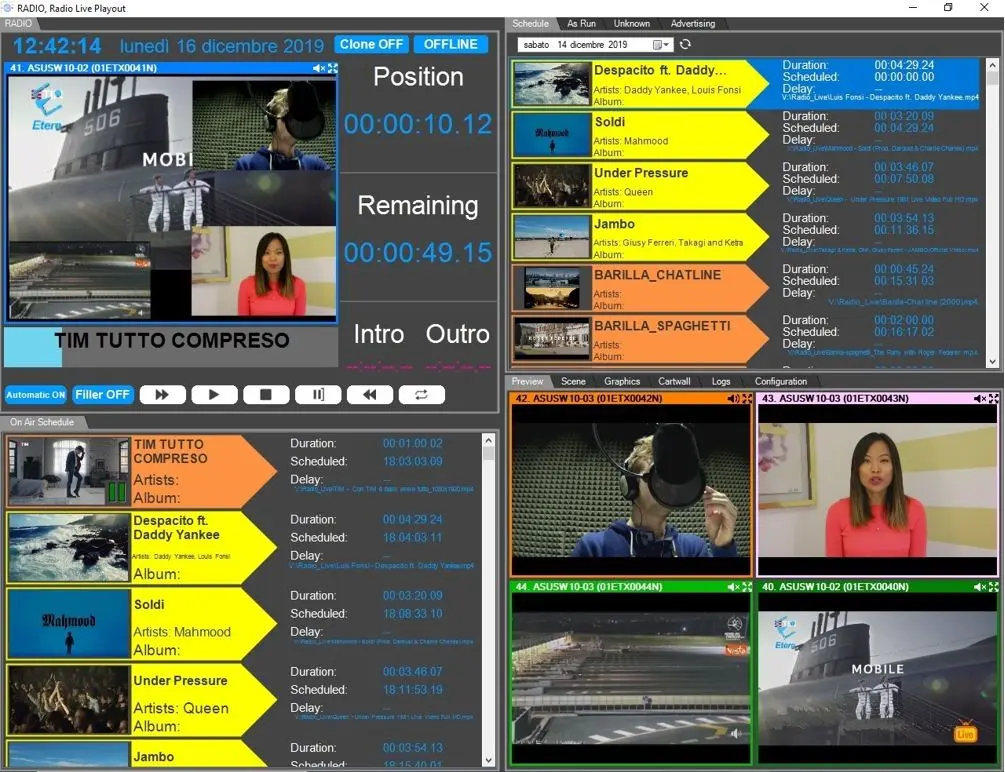 Radio-live_client_playout
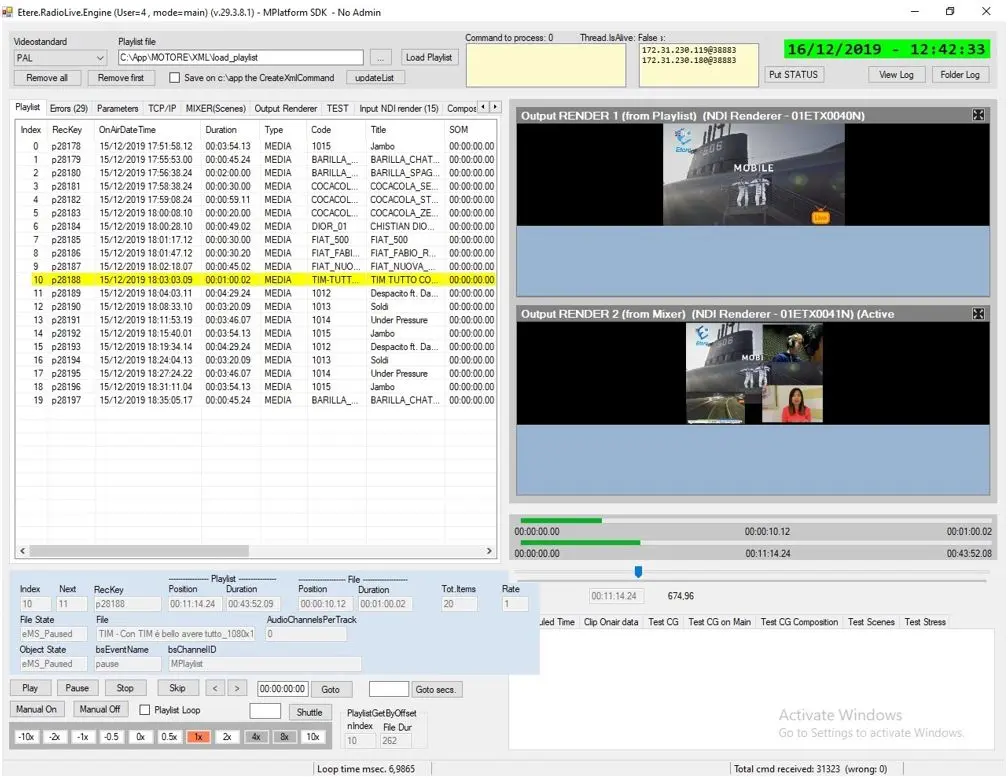 Radio-live_server_playout